Table Of Content
- What color is your tongue? What's healthy, what's not?
- What? Another medical form to fill out?
- Get the latest in health news delivered to your inbox!
- Platelet-Rich Plasma for Treatment of Hair Loss Improves Patient-Reported Quality of Life
- Platelet-Rich Plasma (PRP) Injections for Hair Loss: What to Know Beforehand
- Can PRP treat hair loss?
- Main Content

Doctors inject plasma into the scalp where hair loss has occurred. They typically administer injections monthly for three months, then spread them out over about three or four months for up to two years. The injection schedule will depend on your genetics, pattern and amount of hair loss, age and hormones.
What color is your tongue? What's healthy, what's not?
PRP has been shown to help with hair transplant survival by pretreating areas prior to harvesting. There is generally an induction phase which consists of three monthly treatments followed by maintenance treatments every three to six months. Viral hair loss products have been gaining media popularity, but can they help with alopecia? You may see it offered as a service at a spa, but Rapaport says to be careful if a thorough consultation isn’t included. He says PRP can be dangerous if technicians are sloppy and aren’t using FDA-approved tubes or aren’t careful about making sure your blood — and only your blood — is injected.
What? Another medical form to fill out?
In women, this might look like a widening part with normal hair thickness at the back of the head. In a 2014 study of 20 people, PRP treatment increased hair density and peaked at 3 months. The researchers, therefore, recommend PRP every 6 months for best results. PRP therapy is a treatment for hair loss that may help promote and maintain hair growth. That said, PRP therapy is expensive and may not be safe for everyone.
Get the latest in health news delivered to your inbox!
Maintenance treatments every six to 12 months are sometimes necessary for continued regrowth. Once platelets are in the area that’s being treated, they break down and release growth factors, which are compounds that help cells repair and renew. • A small amount of your own blood is extracted (blood draw at our office) Then the PRP is separated from the rest of the blood via a centrifuge. The centrifuge can separate red blood cells, white blood cells, platelets, and plasma. After the Platelet Rich Plasma (PRP) is extracted and the scalp is numbed, Dr. Slater injects the PRP which contains the healing factors into the areas that are thinning.
The effect of PRP on Ki67 levels was evident already after 2 months, and was sustained throughout the study period (1 year) [4]. The relapse of androgenic alopecia in all patients was not evaluated until 12 months after the last treatment. Four patients reported progressive hair loss that was more evident 16 months after the last treatment. PRP therapy for hair loss is considered an elective cosmetic procedure and is not typically covered by insurance.
Is Platelet Rich Plasma snake oil or panacea? Answer may surprise you - Islander News.com
Is Platelet Rich Plasma snake oil or panacea? Answer may surprise you.
Posted: Sun, 28 May 2023 07:00:00 GMT [source]
Platelet-Rich Plasma (PRP) Injections for Hair Loss: What to Know Beforehand
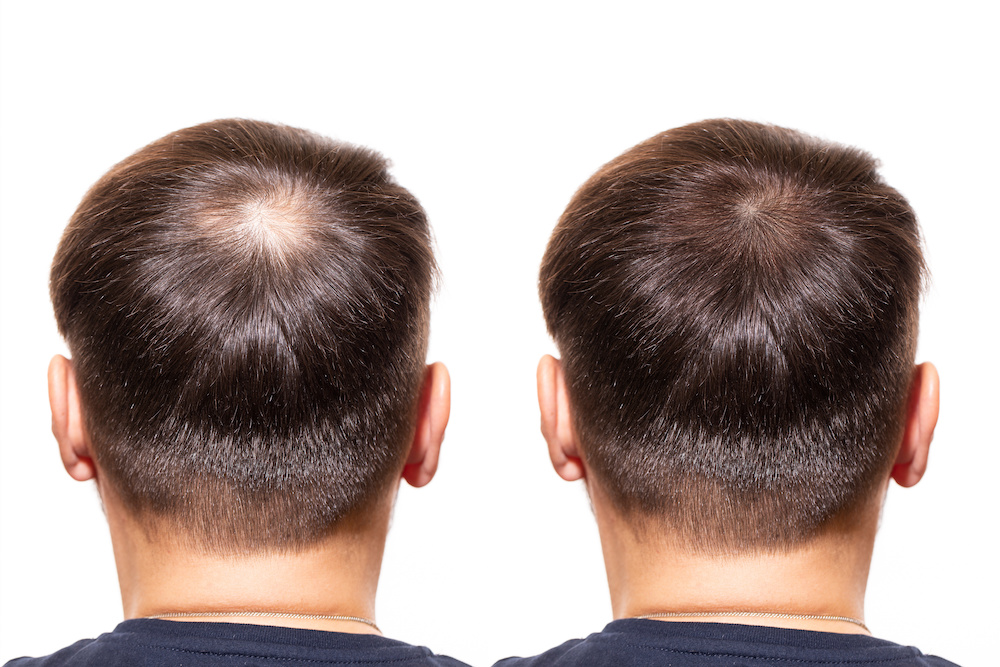
If you have insurance, speak with your provider to see whether they cover it. If you don’t have health insurance, the PRP therapy’s doctor’s office might offer payment plans or reduced fares for self-payers. Your blood is also made up of platelets, white cells, and red blood cells. A series of clinical studies in 2021 found that PRP injections worked no better than a placebo for people with osteoarthritis of the ankle or knee, or for Achilles tendinitis.
Can PRP treat hair loss?
It is characterized by progressive hair loss, affecting both sexes. Food and Drug Administration (FDA) for treating androgenic alopecia are limited to minoxidil and finasteride. But the treatment is so new that researchers have many questions to resolve about the best formulas and techniques. The cost may not be covered by insurance, and you'll have to decide whether the possible benefits are worth the expense.
According to literature, PRP prepared with the ACP double syringe is poor in leucocytes and erythrocytes and has a platelet concentration of approx. Kang et al. [27] reported the clinical efficacy of injection of CD34+ cell-containing PRP preparations for male and female pattern hair loss. At 6 months, the patients presented clinical improvement in mean hair count (29.2% ± 17.8%), mean hair thickness (46.4% ± 37.5%), and mean 2-point score (121.3% ± 66.8%) compared with baseline. Rinaldi et al. [4] described the efficacy and safety of PRP in the first report on alopecia areata in a randomized, double-blind, placebo- and active-controlled, half-head, parallel-group study. A total of 45 patients with alopecia areata were randomized to receive intralesional injections of PRP, triamcinolone acetonide (TrA), or placebo on half of their scalp.
Rinaldi et al. [4] prepared PRP by collecting 36 ml of peripheral blood. The PRP fraction was separated and suspended with calcium gluconate.
If the follicles are damaged or simply weak this treatment can improve hair loss dramatically. The authors of an additional review of clinical studies, which the International Journal of Women’s Dermatology published, considered PRP to be a “promising” treatment for hair loss, based on their findings. Platelets are a component of blood, along with red and white blood cells. When a person sustains a cut or wound, the platelets are some of the body’s “first responders” that arrive to stop the bleeding and promote healing. During the treatment, a technician draws your blood and spins it in a centrifuge to separate out the platelets and plasma. Doctors then inject the plasma, which helps repair blood vessels, promote cell growth and wound healing, and stimulate collagen production.
Patients with hair loss localized to the frontal and parietal areas were injected with the PRP only on the frontal areas; the parietal area was treated with placebo (injection of physiological solution). Patients with hair loss in the parietal and vertex parts were injected with the PRP only in the parietal part of the scalp; the vertex area was treated with placebo (injection of physiological solution). The same number of injections was repeated in the scalp half treated with PRP and in the half treated with placebo. Photographs of the areas of a sample scalp treated with PRP are shown in Figure 1. While individual responses may vary, and optimal results often require multiple sessions.




No comments:
Post a Comment